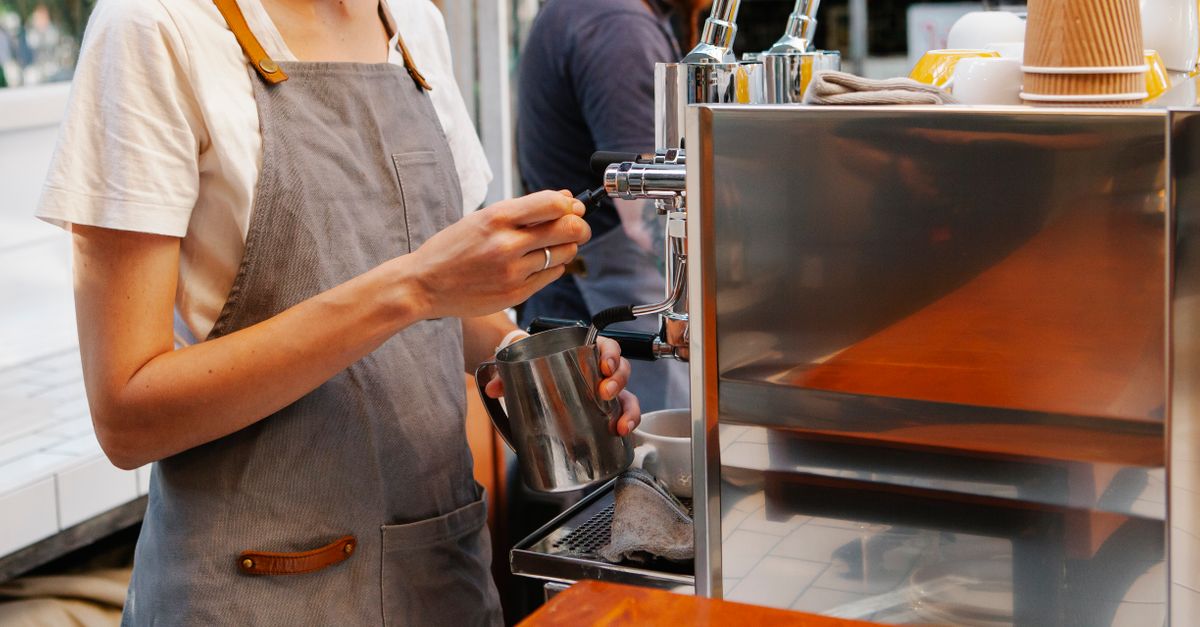
Why Most Budget Home Espresso Machines Fail You (And What Actually Works for Real Cafe-Quality Coffee)
The dream of a perfect morning espresso, right in your own kitchen, is incredibly appealing. I’ve been there. The aroma, the rich crema, the little ritual – it feels like a small piece of luxury you can have every day. So, like many, I started my journey into home espresso by eyeing the budget-friendly machines. The ones promising café-quality shots for under $200, sometimes even under $100.
I convinced myself, ‘It’s just hot water and coffee, how different can it be?’ What followed was a journey of disappointment, watery shots, bitter brews, and a growing pile of unused coffee beans. The reality is, most budget home espresso machines aren’t designed to deliver what they implicitly promise. They’re built to hit a price point, not a quality standard. In my experience, focusing solely on the lowest upfront cost is the biggest mistake you can make when trying to bring authentic espresso home.
What changed everything for me was shifting my perspective from ‘cheapest available’ to ‘minimum viable quality.’ It’s not about spending a fortune, but understanding where your money needs to go to avoid throwing it away on glorified coffee warmers. I learned that true café-quality espresso at home is less about the brand name on the machine and more about the fundamental components and a strategic approach to your setup.
Key Takeaways
- Most budget espresso machines cut corners on critical components like the pump, boiler/thermoblock, and portafilter, leading to inconsistent temperature, pressure, and extraction.
- Investing in a quality grinder is paramount; a cheap grinder will always ruin even the best espresso machine’s output, as grind consistency and fine adjustment are non-negotiable.
- Focus on machines with a 15-bar pump (or vibratory pump) and a stable heating element (brass boiler or well-designed thermoblock) for consistent pressure and temperature.
- Prioritize machines with a 58mm commercial-style portafilter for better thermal stability and compatibility with higher-quality accessories.
The Fatal Flaws: Where Budget Machines Cut Corners
The allure of a $99 espresso machine is strong, but the reality behind the shiny exterior is often grim. These machines aren’t just ‘simpler’; they fundamentally compromise on the core principles of espresso making. In my early days, I went through two such machines, each promising Italian craftsmanship and delivering only frustration. The mistake I see most often is people thinking a ‘good deal’ on an espresso machine means they’re saving money. In truth, it often means buying something that won’t deliver a real espresso and will quickly become kitchen counter clutter.
Let’s break down where these budget machines fall short, based on what I’ve learned the hard way:
1. The Inconsistent Pump: A Weak Heartbeat
Espresso requires precise pressure – typically 9 bars at the grouphead – to force water through finely ground coffee, extracting those rich flavors and oils. Most budget machines employ cheap vibratory pumps that struggle to maintain consistent pressure. I remember my first machine, a shiny red model that loudly whirred. The ‘espresso’ it produced was thin, pale, and lacked any real crema. It wasn’t just my technique; the machine itself couldn’t generate the necessary force evenly.
What’s actually happening: these pumps often deliver fluctuating pressure, sometimes peaking at 15-19 bars (which sounds impressive on the box) but then dipping wildly during extraction. This uneven pressure leads to channeling, where water finds paths of least resistance through the coffee puck, resulting in underextracted (sour) and overextracted (bitter) flavors in the same shot. It’s like trying to sing a beautiful melody when your voice keeps cracking. Without stable pressure, true espresso is impossible.
2. The Flimsy Heating Element: Temperature Swings and Bad Taste
Temperature stability is another non-negotiable for good espresso. Water needs to be consistently around 195-205°F (90-96°C). Budget machines typically use small aluminum thermoblocks or thin stainless steel boilers that heat up quickly but lose heat just as fast. This means your first shot might be okay, but subsequent shots, or even different stages of a single shot, can vary wildly in temperature. This is known as temperature surfing, and it’s a constant battle.
My second budget machine was better than the first, but I still couldn’t get consistent results. I’d pull a shot, steam milk, and then the next shot would be noticeably cooler. This inconsistency leads to a range of flavor defects. Too hot, and you get bitterness and burnt notes. Too cold, and you get sour, weak coffee. A quality machine uses a heavier brass boiler or a more sophisticated thermoblock design with PID control to maintain a stable temperature, ensuring proper extraction every time. Think of it like trying to cook a delicate sauce on a stove with only two settings: off and high. You need precise control.
3. The Pressurized Portafilter: Hiding a Multitude of Sins
Many budget espresso machines come with what’s called a pressurized portafilter (also known as a ‘dual-wall’ basket or ‘crema enhancer’). On the surface, this sounds great – it promises thick crema, even with pre-ground coffee. But it’s a crutch, not a feature. A pressurized portafilter has a tiny hole at the bottom that artificially creates back pressure, forcing the coffee out in a foamy stream. This produces an illusion of crema, which is actually just air bubbles, not the rich, emulsified oils you get from proper extraction.
I used one of these for months, wondering why my espresso tasted flat despite the ‘crema.’ The truth is, a pressurized portafilter masks bad grind, poor tamping, and inconsistent machine performance. It prevents you from learning to pull a real shot. A true espresso machine uses a non-pressurized portafilter (single-wall basket) which demands a precise grind, proper dosing, and consistent tamping. This is where the skill and the magic of espresso truly happen. If a machine relies on a pressurized portafilter, it’s a clear sign it’s designed to compensate for its inherent weaknesses, not to deliver genuine espresso.
The Non-Negotiable Investment: A Quality Grinder
This is the single most important piece of advice I can give anyone starting their home espresso journey, and it’s the one I ignored for far too long. A cheap grinder will ruin even the most expensive espresso machine. I learned this the hard way. I had upgraded to a slightly better machine, still not top-tier, but definitely a step up from the budget models. Yet, my espresso was still inconsistent. Sometimes sour, sometimes bitter, never quite right.
I was using a blade grinder, then a cheap burr grinder designed for drip coffee. Neither could produce the fine, consistent, and uniform grind necessary for espresso. Espresso grind needs to be incredibly fine, almost like powdered sugar, but also remarkably consistent in particle size. A grinder with poor burrs or inconsistent adjustment steps will produce a mixture of fine dust and coarse chunks. This leads to uneven extraction: the water rushes through the coarse parts, underextracting them, and gets choked by the fine dust, overextracting other parts.
What actually works: Invest in a dedicated espresso grinder with high-quality conical or flat burrs and micro-step adjustments. This is often the most expensive single component in a home espresso setup, and for good reason. It allows you to dial in your grind precisely, making tiny adjustments until your shot extracts perfectly. I eventually saved up for a proper espresso grinder, and it was like unlocking a secret level of coffee flavor. Suddenly, my okay machine was producing genuinely good espresso because the grind was consistent.
Think of it this way: the espresso machine is the engine, but the grinder is the fuel delivery system. If your fuel is contaminated or improperly prepared, even the best engine will sputter.
What Actually Works: Strategic Splurges for Real Espresso
So, if budget machines are a trap, and a good grinder is essential, what’s the path to café-quality espresso without needing a second mortgage? It’s about being strategic with your purchases and understanding where true value lies.
1. Prioritize a Quality Grinder First
Yes, I’m repeating myself, but it cannot be stressed enough. If your budget is $500 total, allocate at least $250-$300 (or more) to the grinder. Options like the Baratza Sette 270, Eureka Mignon Facile, or even a good manual grinder like the 1Zpresso JX-Pro can be game-changers. Without this, you’re building a house on sand.
2. Look for Key Machine Features (Even in Entry-Level Models)
Once the grinder is sorted, focus on the espresso machine’s fundamentals. You’re looking for:**
- Vibratory Pump with 15-Bar Rating: This is standard, but ensure it’s a reputable brand (often Ulka or CEME) that can reliably hit and maintain the 9 bars needed at the grouphead. The stated 15-bar is the pump’s max capacity, not the delivery pressure.
- Stable Heating Element: A brass boiler is ideal for thermal mass, like in the Gaggia Classic Pro. A well-designed thermoblock (like in some Breville models) can also work, especially if paired with a PID for temperature control.
- Non-Pressurized Portafilter: This is crucial. If a machine only comes with a pressurized basket, it’s a red flag. You need the single-wall baskets to truly learn and control extraction.
- 58mm Portafilter: This is a commercial standard size. Machines with larger or smaller portafilters can have thermal stability issues or limit your accessory options (like tampers and distribution tools). The more thermal mass, the better. My current machine uses a 58mm portafilter, and the difference in temperature stability is palpable.
3. Consider Reputable Entry-Level Brands
Instead of no-name brands, look for entry-level models from companies known for coffee equipment. The Gaggia Classic Pro is often cited as the best entry-level ‘true’ espresso machine due to its heavy brass boiler, commercial-style portafilter, and upgrade potential (like adding a PID controller later). The Breville Bambino Plus is another excellent option for its fast heat-up and integrated steaming, offering fantastic performance for its price, though it uses a thermoblock system. These machines might cost $400-$600, but combined with a good grinder, they represent the minimum viable quality for genuine espresso.
4. Understand the Workflow and Practice
Even with great equipment, espresso has a learning curve. There are variables to control: grind size, dose (how much coffee), tamp pressure, and shot time. Expect to waste some coffee learning to ‘dial in’ your shots. What changed for me was embracing the process, not just chasing the end result. Watching videos, reading guides, and keeping a small log of my grind settings and shot times helped immensely.
- Dose: How many grams of coffee? Usually 18-20g for a double shot in a 58mm basket.
- Yield: How many grams of liquid espresso came out?
- Time: How long did it take for the shot to pull (from pump activation to desired yield)? Aim for 25-30 seconds.
If a shot runs too fast (under 20 seconds) and tastes sour, grind finer. If it runs too slow (over 35 seconds) and tastes bitter, grind coarser. This iterative process is key to consistency and deliciousness.
The Long-Term Savings of a Strategic Investment
It might seem counter-intuitive to spend more upfront to save money, but with home espresso, it holds true. My early budget machines ended up being sunk costs. They produced disappointing coffee, were quickly abandoned, and ultimately replaced. The total cost of those initial ‘savings’ easily surpassed what I would have spent on a single, quality entry-level setup from the start.
Furthermore, when you have a machine that can produce good espresso, you’re far less likely to buy expensive coffee drinks from cafés. Even at $5 a drink, that adds up. A quality bag of beans, typically $15-$20, can make 10-15 shots. The return on investment for a good home setup quickly pays for itself if you’re a regular espresso drinker.
My journey from watery disappointment to rich, satisfying espresso was a lesson in understanding value over mere price. It’s not about a lavish setup, but about respecting the science and craft of espresso by investing in the core components that actually enable it. When you prioritize a quality grinder and a machine with stable pressure and temperature, you’re not just buying equipment; you’re buying the potential for genuine café-quality coffee at home, every single day.
Frequently Asked Questions
Q: Can I use pre-ground coffee with an espresso machine?
A: While you can use pre-ground coffee, especially with a pressurized portafilter, it will never yield café-quality espresso. Pre-ground coffee is too coarse for optimal espresso extraction, and it stales rapidly. For true espresso, you need freshly ground beans, adjusted specifically for your machine and preferred shot.
Q: How much should I expect to spend on a decent home espresso setup?
A: For a truly decent setup that produces café-quality espresso, expect to spend between $600-$1000. This budget allows for a quality grinder (which is crucial, often $250-$400) and a capable entry-level espresso machine (like a Gaggia Classic Pro or Breville Bambino Plus, $350-$600). Anything significantly below this range typically involves compromises that make true espresso difficult to achieve.
Q: What’s the difference between a thermoblock and a boiler in an espresso machine?
A: A thermoblock heats water on demand as it passes through a coiled metal block. It heats up quickly, but can be less thermally stable for consistent temperature during longer extractions. A boiler is a sealed reservoir that heats a larger volume of water. It takes longer to heat up but offers greater thermal stability, which is essential for consistent espresso shots.
Q: Why is grind consistency so important for espresso?
A: Espresso relies on high pressure forcing water through a finely packed bed of coffee. If the grind is inconsistent (mix of fine dust and coarse particles), water will find the path of least resistance through the coarse areas (channeling), leading to uneven extraction, resulting in sour or bitter flavors. A consistent grind ensures even resistance and optimal flavor extraction.
Q: Is it worth upgrading my budget machine with a PID controller?
A: If you have a solid entry-level machine with a boiler (like a Gaggia Classic Pro), adding a PID (Proportional-Integral-Derivative) controller can be a highly worthwhile upgrade. It provides precise digital control over your brew temperature, significantly improving shot consistency and flavor. However, it’s generally not recommended for ultra-budget machines with very flimsy heating elements or pumps, as it won’t fix those fundamental limitations.
Written by Naomi Reyes
Relationships, communication, and self-perception
After years training workplace mediators, Naomi writes about why communication and relationship advice so often collapses under real disagreement.
You Might Also Like
Why Most Personal Reinventions Fail (And The Layered Identity Strategy That Actually Works)
Discover why common personal reinvention attempts fall short and learn the 'Layered Identity' strategy for lasting transformation.
The Hidden Cost of Social Media News Consumption That Nobody Talks About (And How I Found Real Clarity)
Discover the unseen drains of consuming news via social media, and how switching sources brought back my focus and peace of mind.
Why Most Beginners Fail at Mastering Their New Microwave (And What Actually Works for Real Efficiency)
Unlock your microwave's true potential. Discover why common mistakes lead to frustration and learn what actually works for perfectly heated meals, every time.