The Hidden Cost of Social Media News Consumption That Nobody Talks About (And How I Found Real Clarity)
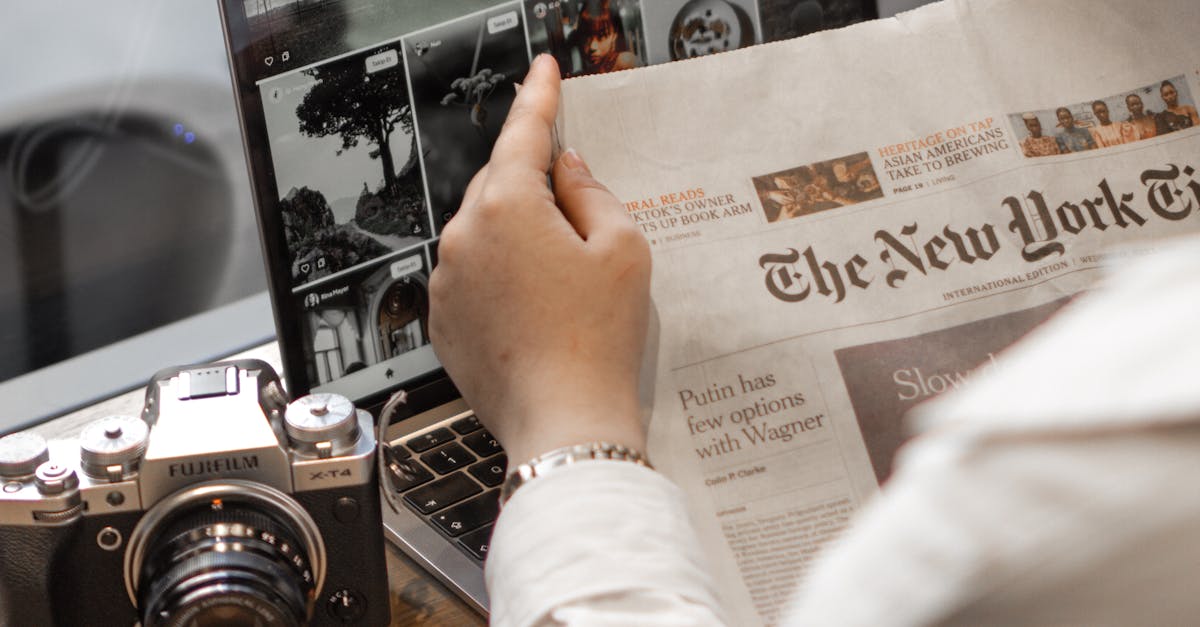
I used to pride myself on being ‘informed.’ My mornings began with a quick scroll through Twitter, checking headlines. Lunch breaks were a dive into Instagram stories, seeing what major outlets were covering. Evenings, a quick scan of Facebook before bed, just to make sure I hadn’t missed anything crucial. I thought I was staying on top of the world, a well-read citizen engaged with current events. But secretly, I was exhausted. Not just mentally, but emotionally. I felt a constant hum of anxiety, a low-grade worry that followed me from one notification to the next.
Then came the turning point. A close friend, witnessing my perpetual state of digital agitation, gently pointed out that my ‘informed’ status wasn’t leading to understanding, but to overwhelm. She challenged me to audit where my news truly came from. What I found was a shocking amount of noise, repetition, and emotional manipulation, all disguised as information. My social media news habit wasn’t making me smarter; it was making me stressed, reactive, and ultimately, less informed about what truly mattered.
This article isn’t about shunning news or burying your head in the sand. It’s about recognizing the insidious, often invisible costs of how we consume news, especially through social media, and offering a different path. It’s about regaining clarity, emotional stability, and genuine understanding, rather than a frantic, fragmented awareness.
Key Takeaways
- Social media algorithms prioritize engagement over factual accuracy, creating an echo chamber of sensationalism and bias.
- Constant exposure to fragmented, emotionally charged news snippets leads to chronic low-grade anxiety and decision fatigue.
- Breaking free requires intentionally curating diverse, long-form news sources and scheduling dedicated consumption times.
- Prioritize understanding and critical thinking over simply being ‘up-to-date’ to cultivate genuine clarity.
The Algorithmic Echo Chamber: Why Your Feed Isn’t ‘News’
The biggest misconception I had was believing my social media feed was a neutral delivery system for news. In my experience, it’s anything but. Social media algorithms are designed for one thing: engagement. They want you to stay on the platform, scrolling, reacting, and sharing. This means they prioritize content that elicits strong emotional responses – outrage, fear, excitement, validation. Nuance, context, and in-depth analysis are often sidelined for the most clickable, shareable, and often, most extreme versions of a story.
Think about it: a headline screaming about a global crisis will get more clicks and comments than a carefully researched report on complex economic policy. This isn’t because people are inherently less interested in economics, but because the algorithm pushes the former more aggressively. What happens then is a vicious cycle. The more you click on dramatic headlines, the more the algorithm learns you like drama, and the more it feeds you. You end up in an echo chamber of sensationalism, where every event feels like the end of the world, and every issue is black and white.
For example, I remember a period where my feeds were inundated with stories about a specific political issue. Every post, every shared article, every comment section was a torrent of passionate, often angry, opinions. I felt compelled to engage, to read every take, to understand every facet of the argument as presented on social media. What I didn’t realize then was that I was seeing a highly curated, often polarized, view. Real journalism, which might have explored the complexities, historical context, and diverse perspectives, was buried under the sheer volume of opinion and reaction. My ‘news’ became a reflection of my social network’s outrage, not a balanced view of reality.
What changed for me was realizing that social media is a disseminator of information, not a creator of it, and its dissemination model is fundamentally flawed for objective news. It’s like trying to get a balanced diet by only eating candy because it tastes good – eventually, you’ll be malnourished and feel terrible. My strategy now is to avoid consuming news directly from social media feeds. Instead, I treat social platforms as a place to connect with friends and family, and sometimes to follow actual journalists or reputable organizations, but I always go directly to their source material for the full story, never just the snippet in the feed.
The Chronic Anxiety Drip: Fragmented News and Emotional Overload
One of the most insidious hidden costs of social media news consumption is the constant, low-grade anxiety it cultivates. Unlike traditional news consumption – reading a newspaper, watching a dedicated broadcast – social media delivers news in fragmented, bite-sized pieces throughout your entire day. Each notification, each scroll, exposes you to a new snippet of potential stress. It’s like having a leaky faucet of emotional distress, constantly dripping.
I found myself in a perpetual state of ‘what now?’ anxiety. A quick glance at my phone would show a headline about a natural disaster, followed by a post about political unrest, then a snippet about a celebrity scandal, all interspersed with ads and personal updates. There was no beginning, middle, or end to any story. No time for processing. No space for reflection. Just a relentless stream of isolated facts and emotionally charged opinions, demanding my attention and response. My nervous system was in a constant state of low-level activation, always bracing for the next piece of ‘urgent’ information.
Consider the specific example of a major global event, like a pandemic or an economic downturn. On traditional news channels, you might watch a 30-minute special report, giving you context, expert analysis, and a sense of completeness. On social media, that same event is a never-ending torrent: case numbers, conflicting opinions on policy, personal anecdotes of hardship, conspiracy theories, expert takes, viral videos. Each piece, taken in isolation, is overwhelming. Together, they create a cacophony that makes it impossible to form a coherent understanding, leading instead to a feeling of powerlessness and dread.
What changed everything for me was recognizing this pattern and actively disengaging. I realized that constant awareness is not the same as informed understanding. In fact, for many complex issues, constant, fragmented exposure prevents genuine understanding. Now, I actively limit my news intake to specific times and specific, curated sources. This allows me to digest information, understand context, and then put it away. It’s like having a meal, rather than grazing endlessly on crumbs. This simple shift reduced my ambient anxiety by at least 50% within a few weeks, allowing me to focus on my actual daily tasks and relationships without the constant digital hum.
The Illusion of Being ‘Informed’: Missing Depth and Nuance
I mentioned earlier that I used to pride myself on being ‘informed.’ The truth is, I was confusing breadth with depth. Social media provides an illusion of knowing a lot about many things, but it rarely offers true understanding. The character limits, the demand for brevity, and the algorithmic preference for sensationalism actively work against the nuance and context that real understanding requires.
Take any complex issue – climate change, economic inequality, geopolitical conflicts. On social media, these are reduced to soundbites, memes, and emotionally charged comments. You might see a statistic presented out of context, a quote from a politician without the preceding or following sentences, or a video clip designed to elicit a specific reaction. You know of the issue, but you don’t truly understand it.
In my experience, the mistake I see most often is people feeling like they’ve done their due diligence by reading a viral Twitter thread or a heavily summarized infographic on Instagram. While these can be starting points, they are rarely sufficient for genuine comprehension. Without understanding the historical background, the different schools of thought, the underlying data (and its limitations), and the implications of various solutions, you’re not informed; you’re just aware of a surface-level narrative.
What changed everything for me was embracing longer-form content. I started subscribing to newsletters from investigative journalists, reading in-depth articles from respected publications, and even listening to podcasts that dedicated an hour or more to a single topic. This shift wasn’t about consuming more news, but consuming better news. It meant trading the fleeting satisfaction of being ‘up-to-date’ on every minor development for the deeper, more satisfying experience of truly comprehending a few important issues. This practice allows me to engage in conversations with genuine insight, rather than just repeating talking points I’ve skimmed online. It feels less like frantically catching raindrops and more like drinking from a clear, deep well.
The Erosion of Critical Thinking: From Analysis to Reaction
The final, and perhaps most damaging, hidden cost of social media news consumption is its corrosive effect on critical thinking. When news is delivered in a constant, fragmented, and emotionally charged stream, our brains are trained to react, not to analyze. The immediate urge to like, share, comment, or simply scroll past means we rarely take the time to question the source, consider alternative viewpoints, or evaluate the evidence presented.
I noticed this in myself. I would often form an opinion based on the first few posts I saw about an event, feeling a strong emotional pull to agree or disagree. My brain skipped the step of asking: Who is saying this? What are their motives? Is this data reliable? What am I NOT being told? Instead, it jumped straight to: How do I feel about this? How can I express that feeling?
This is precisely what social media is designed to do. It gamifies information consumption, turning complex issues into a series of hot takes and instant judgments. The platforms reward speed and strong opinions, not careful consideration. Over time, this habit can dull our capacity for independent thought and turn us into passive recipients of whatever narrative is being amplified.
One concrete example was a local controversy that dominated my feeds for days. Initial posts painted a very black-and-white picture, and I quickly found myself aligning with the popular outrage. However, a few days later, a local journalist published a thoroughly researched piece that presented a far more nuanced, complex reality, including voices and facts completely omitted from the social media frenzy. I felt a pang of embarrassment and realized how easily I had been swept up in the immediate emotional current.
My recommendation now is to build in a delay. When I encounter a piece of news, particularly on social media, I resist the urge to react immediately. I make a conscious effort to pause, to identify the emotion it’s trying to provoke, and then to seek out at least two or three other sources – ideally from different perspectives and formats (e.g., a written article, a radio report, an interview transcript) – before forming any conclusions. This isn’t about being slow; it’s about being deliberate. It reclaims my mental autonomy and empowers me to think for myself, rather than simply reacting to the feed.
Reclaiming Clarity: Building a Mindful News Diet
The journey from chaotic social media news consumption to genuine clarity isn’t about abstinence; it’s about intentionality. It’s about recognizing the hidden costs and actively redesigning your news diet to serve your mental well-being and intellectual growth, rather than letting algorithms dictate your understanding of the world.
First, acknowledge the problem. Be honest with yourself about how social media news makes you feel. Does it empower you or exhaust you? Does it clarify or confuse? For me, the answer was overwhelmingly the latter. This recognition was the critical first step.
Next, implement strict boundaries. For me, this meant removing all news apps from my phone’s home screen. No more accidental clicks or endless scrolling. I also muted or unfollowed any accounts, even friends, whose primary output was alarmist or hyper-partisan news. This wasn’t about ideological censorship, but about protecting my mental space from a constant barrage of unproductive negativity.
Then, actively cultivate alternative, high-quality sources. Here’s what has worked for me:
- Dedicated Reading Time: Instead of grazing, I dedicate 20-30 minutes each morning, and sometimes another 15 minutes in the evening, to reading news. This is a deliberate act, not a passive scroll.
- Curated Subscriptions: I subscribe to a few reputable news organizations that prioritize in-depth reporting and investigative journalism. This ensures I’m getting content that is well-researched and provides context.
- Diverse Perspectives (Thoughtfully Chosen): I actively seek out publications with different editorial leanings, but always prioritize those known for journalistic integrity over partisan rhetoric. The goal isn’t to agree with everything, but to understand different frameworks of thought, presented respectfully.
- Long-Form Content: Podcasts, documentaries, and actual books on current events or history have become invaluable. They force a slower, more reflective consumption that deepens understanding far more than a tweet ever could.
- Direct Access: When I do see something interesting referenced on social media, I go directly to the original source. I read the full article, not just the shared snippet or the comments about it.
This isn’t just about reading more; it’s about reading smarter. It’s about understanding that real clarity comes from deliberate engagement with well-sourced information, not from passively absorbing an algorithm’s emotional roller coaster. By taking control of my news consumption, I’ve not only reduced my anxiety but also found myself genuinely more informed, capable of critical thought, and much more at peace with the complex world around me. This intentional shift from reactive consumption to thoughtful engagement is the real path to clarity.
Frequently Asked Questions
Q: Isn’t it important to stay updated with breaking news, which social media excels at?
A: While social media can provide breaking news quickly, its format often sacrifices accuracy, context, and nuance for speed and engagement. Prioritize reliable, curated sources for in-depth understanding, and treat social media as a secondary, highly filtered alert system, always cross-referencing information before reacting.
Q: How can I identify a truly reliable news source amidst so much misinformation?
A: Look for sources that demonstrate journalistic integrity: they cite their sources, correct errors, publish diverse perspectives within their reporting, and have a clear editorial policy. Be wary of sensational headlines, anonymous sources, and content that primarily aims to provoke strong emotional reactions without offering deeper context.
Q: Won’t I miss out on important discussions or different viewpoints if I reduce social media news consumption?
A: You might miss some immediate reactions, but you’ll gain clarity and depth. Instead of passively absorbing a fragmented feed, actively seek out in-depth analysis and opinion pieces from reputable sources with diverse viewpoints. This ensures you’re engaging with well-reasoned arguments, not just emotional soundbites.
Q: How long does it take to feel a difference after changing news consumption habits?
A: In my experience, you can start to feel a noticeable reduction in ambient anxiety within a few weeks of implementing intentional changes. Full clarity and a more robust understanding of current events develop over several months as you consistently engage with higher-quality, long-form content.
Q: What if my job or social circle requires me to be aware of social media trends and news cycles?
A: If your profession demands social media awareness, compartmentalize it. Dedicate specific, limited blocks of time for work-related social media review, and use tools to filter out personal news feeds during those times. For social circles, focus on engaging with actual people, not just their shared news. You can still participate in conversations with informed opinions gathered from your curated news diet, often with greater insight than those who only skim social media.
In a world saturated with information, true wisdom lies not in consuming everything, but in discerning what truly serves your understanding and well-being. By thoughtfully curating your news diet, you reclaim not just your peace of mind, but your intellectual autonomy. Start today by choosing one reputable, long-form news source and dedicating just 15 minutes to it, away from the endless scroll. Your clarity will thank you.
Written by Naomi Reyes
Relationships, communication, and self-perception
After years training workplace mediators, Naomi writes about why communication and relationship advice so often collapses under real disagreement.
You Might Also Like
Why Most Personal Reinventions Fail (And The Layered Identity Strategy That Actually Works)
Discover why common personal reinvention attempts fall short and learn the 'Layered Identity' strategy for lasting transformation.

Why Most Beginners Fail at Mastering Their New Microwave (And What Actually Works for Real Efficiency)
Unlock your microwave's true potential. Discover why common mistakes lead to frustration and learn what actually works for perfectly heated meals, every time.

Why Most Budget Home Security Systems Fail (And The Layered Defense That Actually Works)
Don't fall for cheap home security. Discover why budget systems fail and learn the layered defense strategy for real peace of mind.